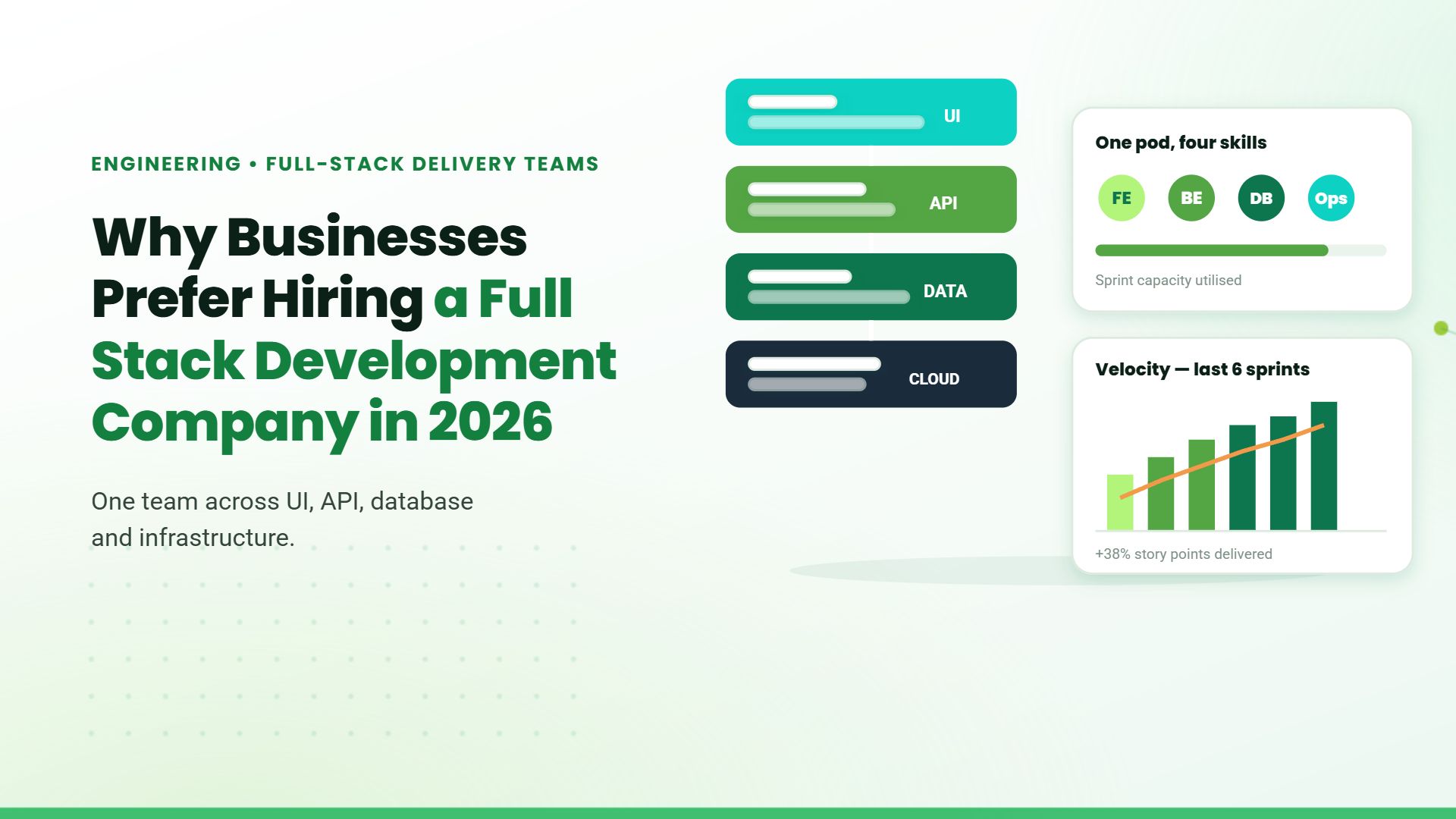
What Is a Full Stack Development?
Full Stack vs Traditional Development Model
| Factor | Full Stack Development | Traditional Development |
|---|---|---|
| Team Structure | Single team handles frontend, backend, and deployment | Separate teams for frontend, backend, and infrastructure |
| Speed of Delivery | Faster due to fewer dependencies and direct execution | Slower due to cross-team coordination and handoffs |
| Cost Efficiency | Lower cost with fewer teams and reduced overhead | Higher cost due to multiple teams and longer timelines |
| Flexibility in Scaling | Easier to scale with multi-skilled developers | Complex scaling across multiple specialized teams |
| Risk and Dependencies | Fewer dependencies, faster issue resolution | High dependency between teams, delays are more likely |
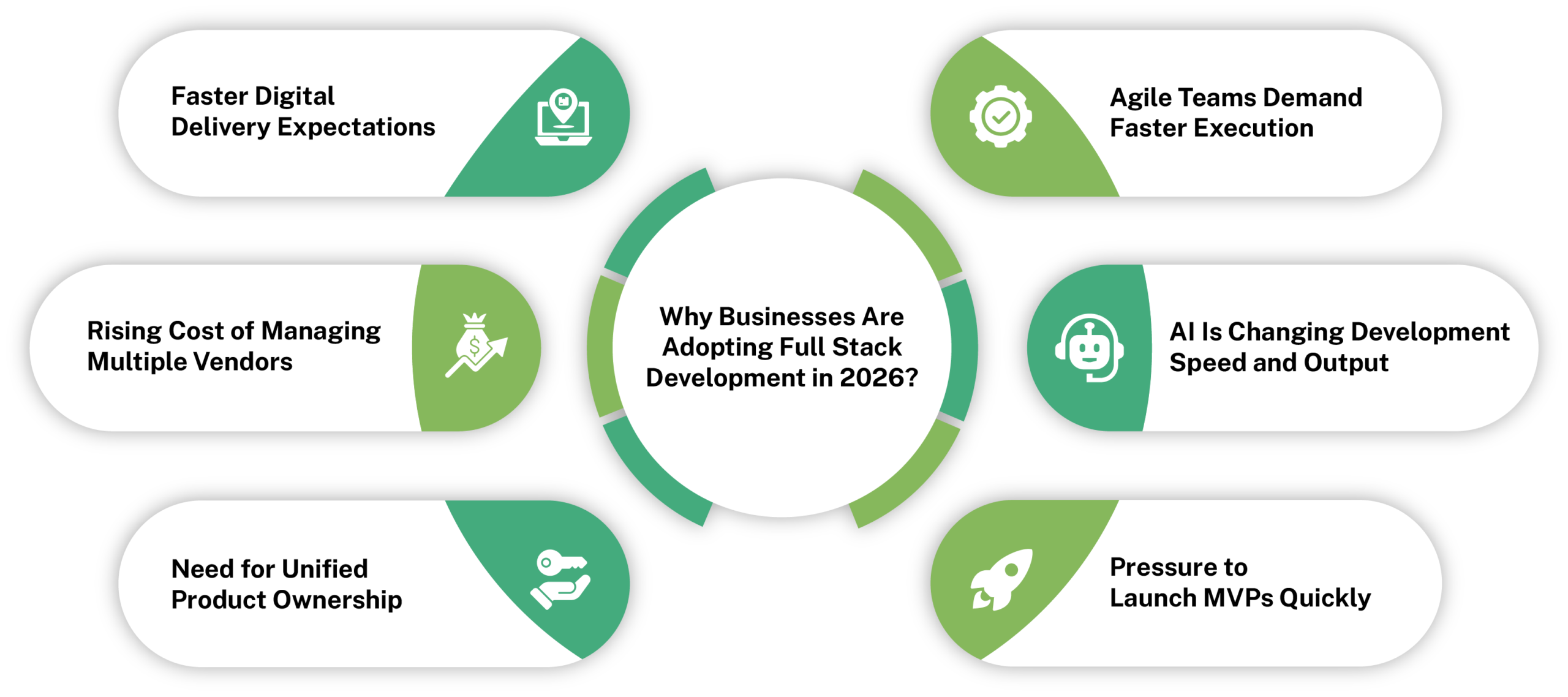
Why Businesses Are Adopting Full Stack Development in 2026?
Capabilities of a Full Stack Development Company
Frontend Development
Backend Development
API Development and System Integration
Database Architecture
Cloud Infrastructure and Deployment
DevOps and CI/CD Automation
Common Business Applications of Full Stack Development
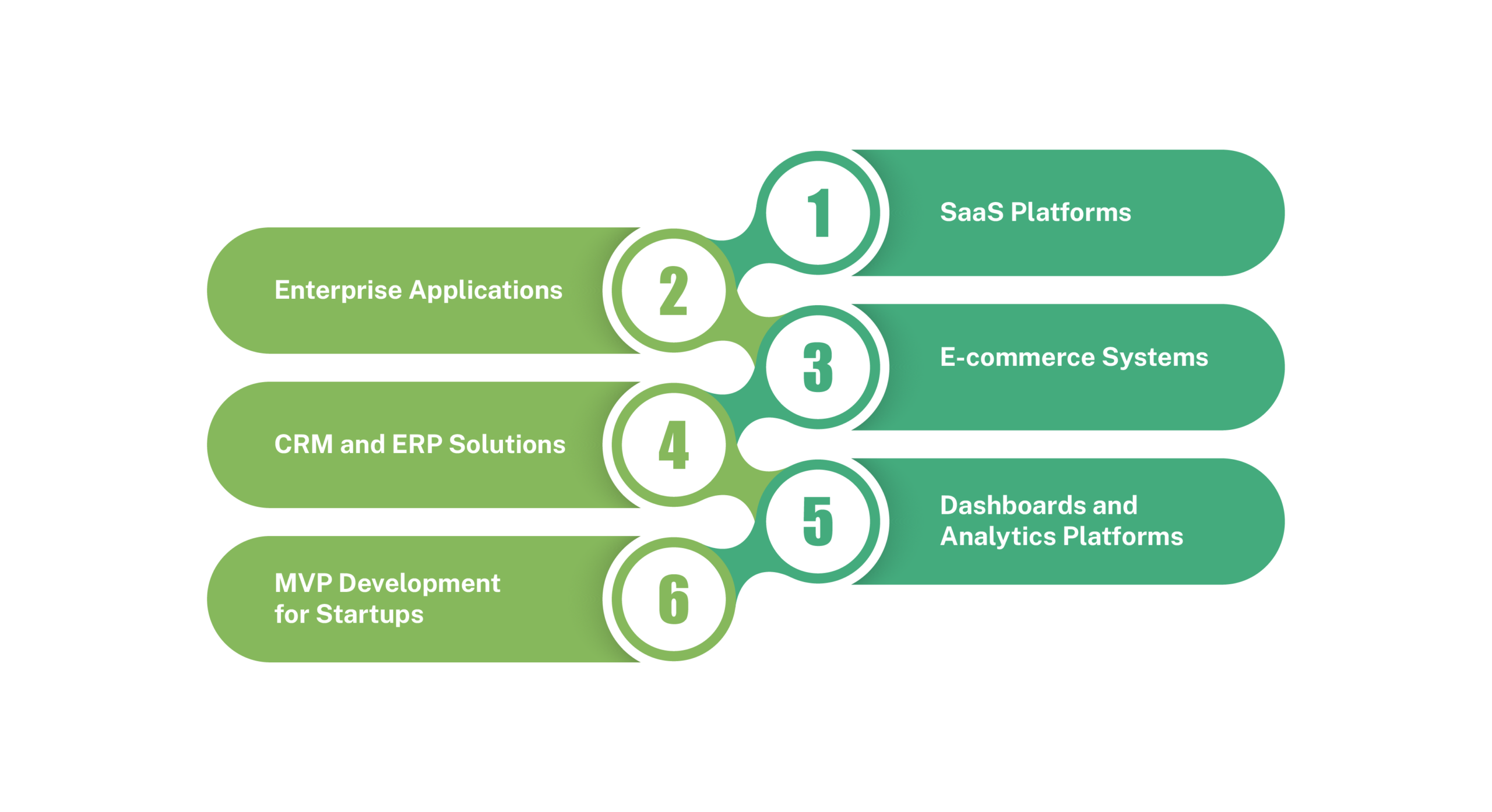
SaaS Platforms
Enterprise Applications
E-commerce Systems
E-commerce systems enable businesses to sell products online with features like catalog management, cart functionality, payments, and order tracking. These platforms need strong backend support for transactions and inventory, along with a fast and responsive frontend experience. Full-stack development connects these layers to ensure smooth and reliable operations.
CRM and ERP Solutions
CRM and ERP solutions manage customer data, sales processes, financial records, and operational workflows. These systems require structured data handling, automation, and integration with other business tools. Full-stack development brings all these components together into a single connected system.
Dashboards and Analytics Platforms
Dashboards and analytics platforms collect data from multiple sources and present it in a clear, usable format. They require backend processing for data handling and frontend layers for visualization. Full-stack development ensures accurate, real-time insights with a seamless user experience.
MVP Development for Startups
Benefits of Hiring a Full Stack Development Company
- Faster Development Cycles A single team handles both frontend and backend, reducing dependencies and speeding up development, iterations, and releases.
- Lower Total Development CostWorking with one team reduces coordination overhead and the need for multiple specialists, helping control overall costs.
- Single Team Ownership A full-stack team takes responsibility for the entire product. This removes confusion around ownership and ensures issues are resolved faster.
- Fewer Communication Gaps With one team involved, communication is more direct, reducing delays and improving overall collaboration.
- Better Stability and Performance The same team builds and manages the full system, leading to fewer integration issues and more stable performance.
- Easier Scalability Systems are designed with growth in mind, making it easier to scale features, users, and infrastructure as needed.
How to Choose the Right Full Stack Development Company
| Factor | What to Look For |
|---|---|
| Technical Expertise | Ability to work across frontend, backend, databases, and cloud, with the right stack choices for your use case. |
| Real Project Experience | Experience building and managing live products with real users and scaling challenges. |
| End-to-End Capability | Ownership from planning and development to deployment and ongoing improvements. |
| Communication Process | Clear updates, structured workflows, and the ability to adapt quickly. |
| Cloud and DevOps Strength | Experience with deployment, scaling, monitoring, and handling production environments. |
| Post-Launch Support | Ongoing support for updates, fixes, and performance improvements. |
Table of Contents
Talk to our Microsoft Expert Consultant
Conclusion
Share this article