Introduction: Why Every Business Is Talking About Low-Code in 2025
Five years ago, “low-code” was a quiet trend. Today, it’s a key topic of discussion among business leaders and owners.
Businesses everywhere are facing the same challenge — a growing list of digital requirements and not enough developers to deliver them.
Traditional development, while robust, simply cannot keep up with the speed, scale, and flexibility that modern enterprises demand.
That’s where low-code platforms come in.
They empower organizations to build apps visually, with drag-and-drop interfaces, ready-to-use templates, and automation — turning development timelines from months into just weeks.
In 2025, three platforms dominate this space:
- OutSystems, for complex, enterprise-scale systems.
- Microsoft Power Apps, for fast, secure, and cost-efficient app creation.
- Mendix, for agile collaboration and hybrid environments.
Each platform brings its own strengths, and this guide breaks them down so you can choose what fits your organization best.
Why Low-Code Is No Longer Optional
Low-code isn’t just about faster app delivery. It’s a strategic approach that changes how businesses operate.
- Speed to market: Launch new applications 3–5x faster.
- Empowered teams: Business users can build their own apps under IT governance.
- Cost savings: Reduce development and maintenance costs drastically.
- Integration-first mindset: Connect data and workflows seamlessly.
- Continuous innovation: Respond faster to business changes.
According to Gartner, by 2028, 60% of enterprise apps will be built using low-code or no-code platforms.
The shift has begun, and it’s here to stay.
Meet the Big Three
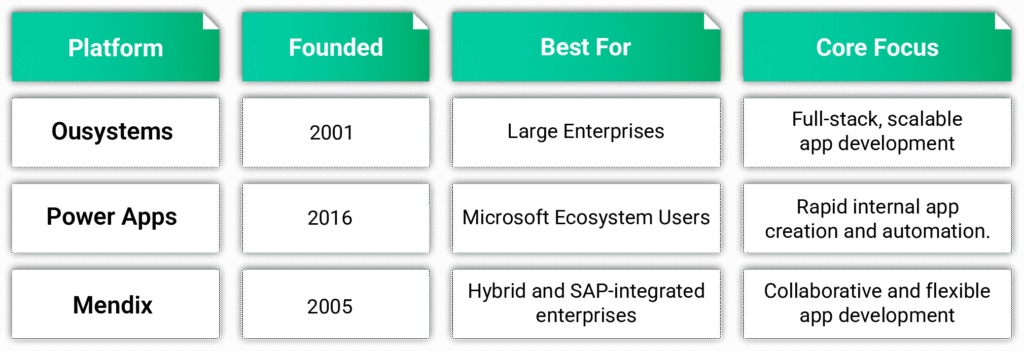
Deep Dive: Understanding the Platforms
OutSystems - The Enterprise Powerhouse
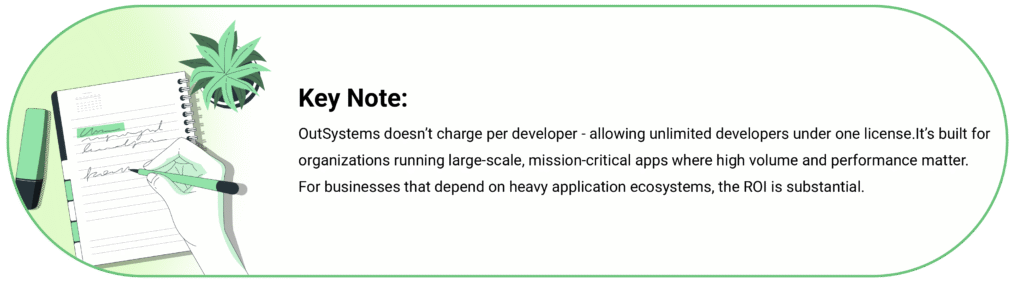
OutSystems is purpose-built for large organizations with complex system landscapes. It’s ideal when you need deep customization, integration, and lifecycle management at scale.
It provides both visual development and full-code extensibility, giving IT departments full control over design, architecture, and deployment.
Highlights
- Full-stack capability: Build complete web and mobile solutions.
- AI-assisted development: Suggests improvements and accelerates delivery.
- Enterprise security: ISO and SOC 2 certified with strong compliance features.
- Built-in CI/CD: Manage continuous delivery across teams.
OutSystems Forge: A marketplace of prebuilt components and connectors.
Best For:
Enterprises building mission-critical, large-scale systems that need performance and reliability.
Microsoft Power Apps - Fast, Accessible, and Business-Driven
Microsoft Power Apps is redefining how organizations approach app creation. It’s part of the Microsoft Power Platform, alongside Power Automate, Power BI, and Power Pages forming a unified ecosystem for automation, analytics, and digital innovation. Power Apps is designed to empower everyone – from IT professionals to business users – to build apps that simplify daily operations and drive efficiency
Highlights
- Full-stack capability: Build complete web and mobile solutions.
- AI-assisted development: Suggests improvements and accelerates delivery.
- Enterprise security: ISO and SOC 2 certified with strong compliance features.
- Built-in CI/CD: Manage continuous delivery across teams.
Best For
Organizations that want to automate workflows, digitize processes, and reduce development costs, especially those already using Microsoft 365 or Azure.
Mendix - The Collaboration-Driven Platform
Mendix emphasizes team collaboration, hybrid deployment, and enterprise connectivity. It’s designed for enterprises that need to integrate multiple systems and enable co-development between IT and business teams.
Highlights
- Visual model-driven design: Build apps without deep code dependency.
- Strong SAP integration: Ideal for companies running SAP environments.
- Agile project management: User stories, version control, and feedback built into the platform.
- Flexible deployment: Public cloud, private cloud, or on-premise.
- AI and IoT-friendly: Supports industrial applications and predictive analytics.
Best For
Enterprises seeking cross-department collaboration and multi-cloud flexibility.
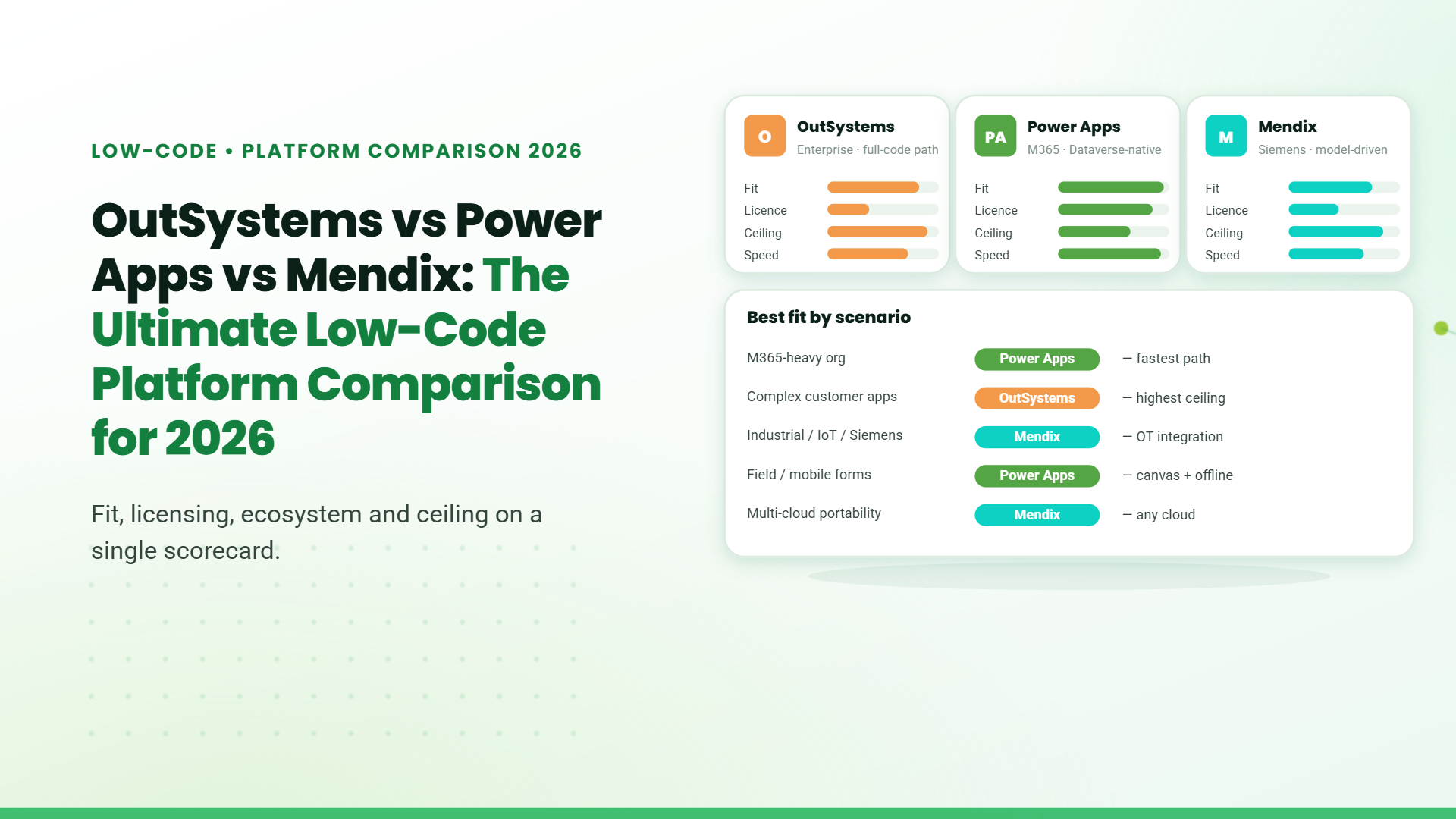
Feature Comparison: OutSystems vs Power Apps vs Mendix.
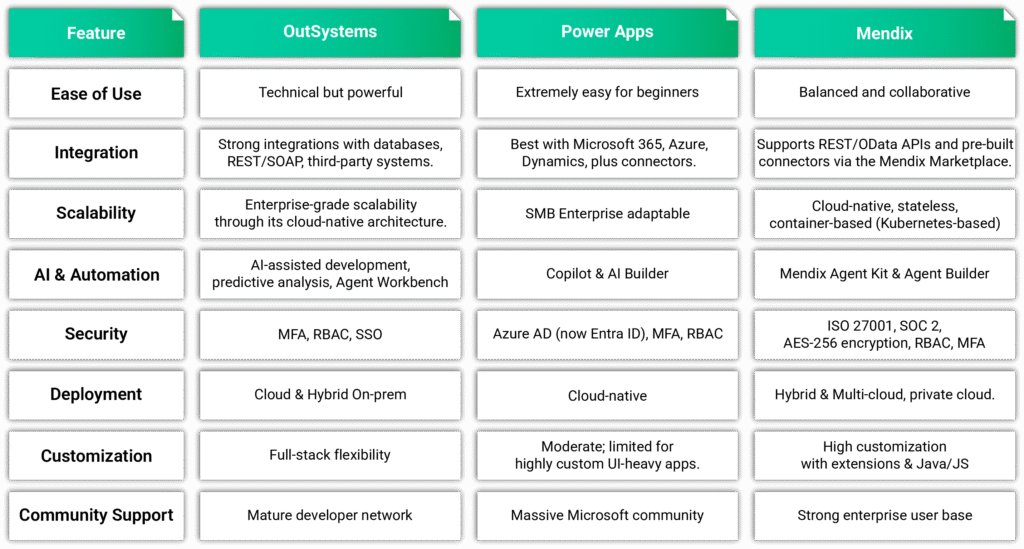
Pricing and Licensing in 2025: OutSystems vs Power Apps vs Mendix
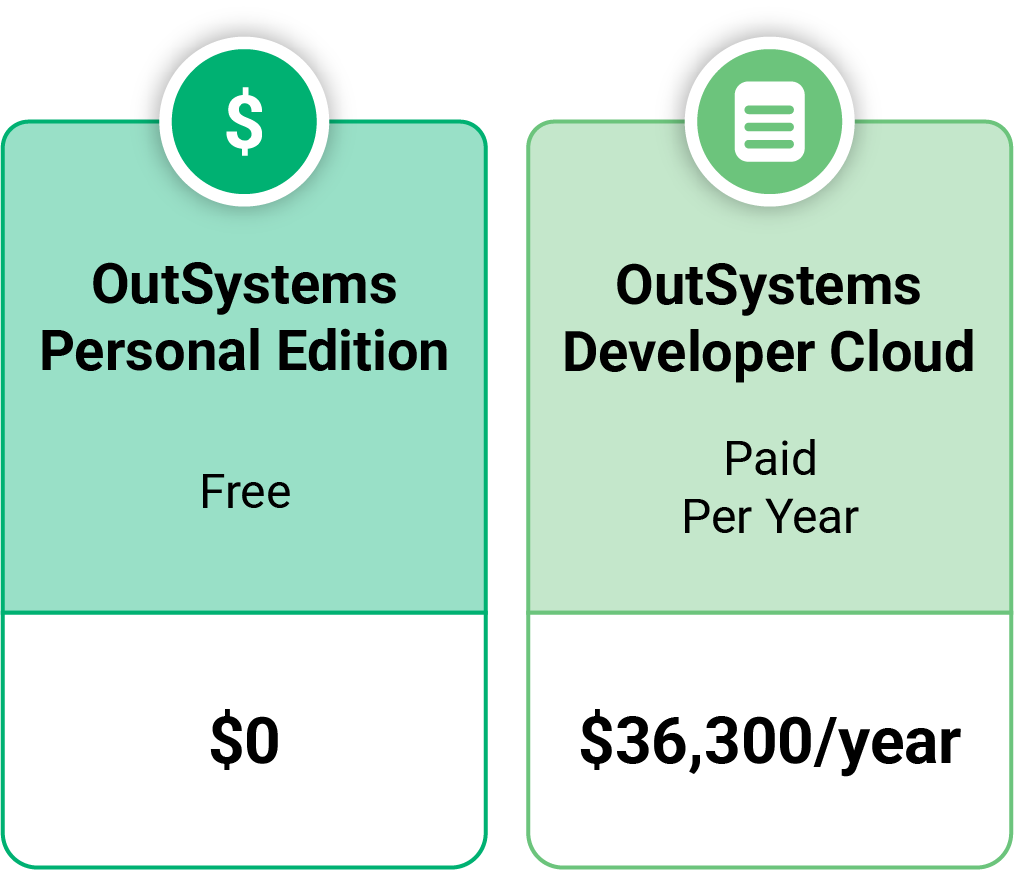
When choosing a low-code development platform, pricing and licensing are key factors that determine long-term value. In 2025, leading players like OutSystems, Microsoft Power Apps, and Mendix continue to shape the market with flexible subscription models and scalability options. Let’s break down what each platform offers
OutSystems: Scalable Power for Complex Enterprise Apps
Model: Subscription-based with usage-based licensing.
Cost Overview
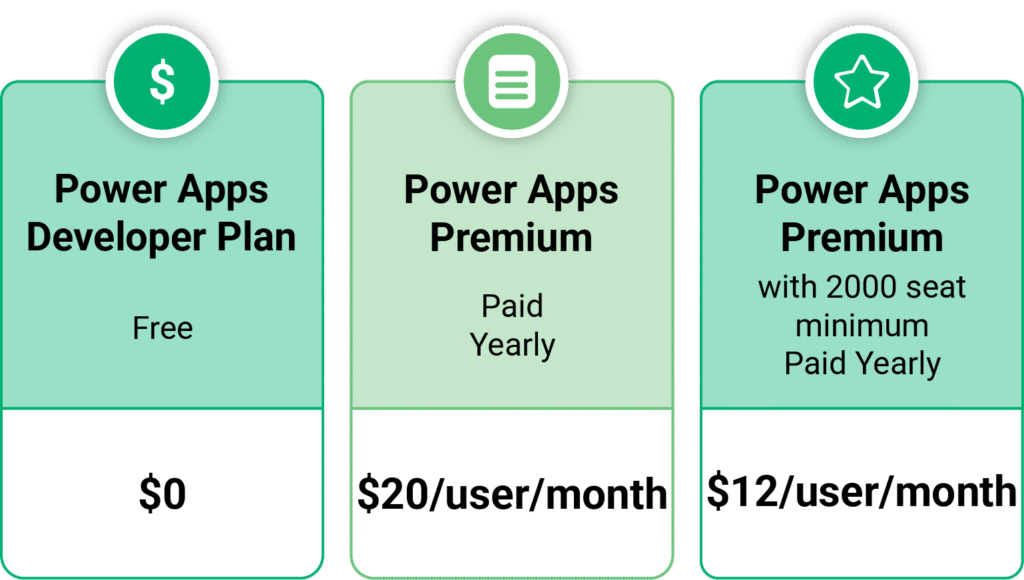
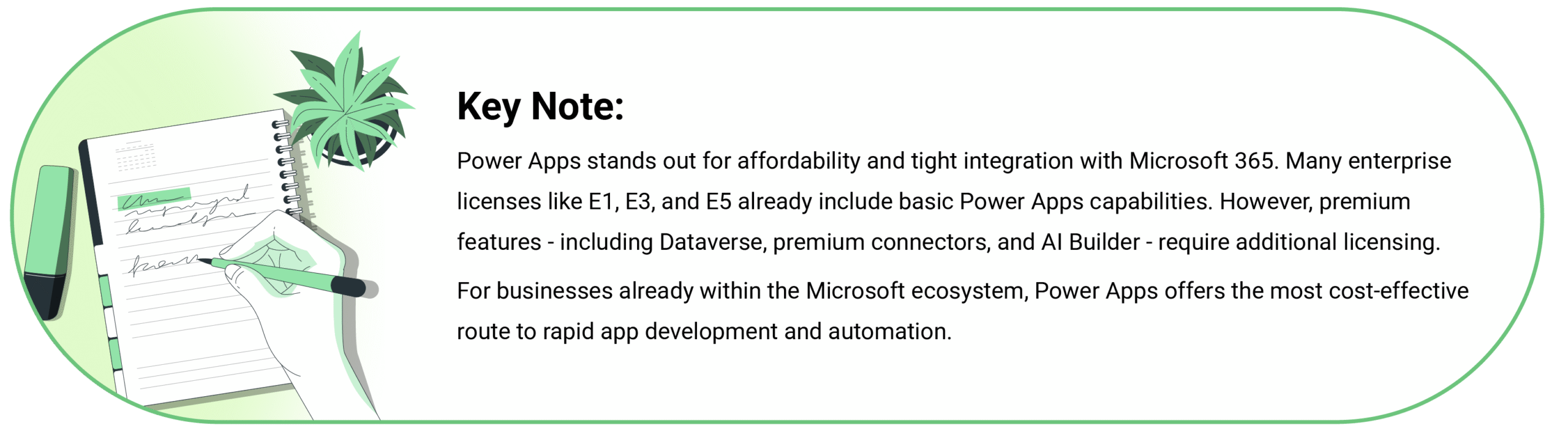
Power Apps: Cost-Effective and Seamlessly Integrated
Model: Per-user or per-app subscription.
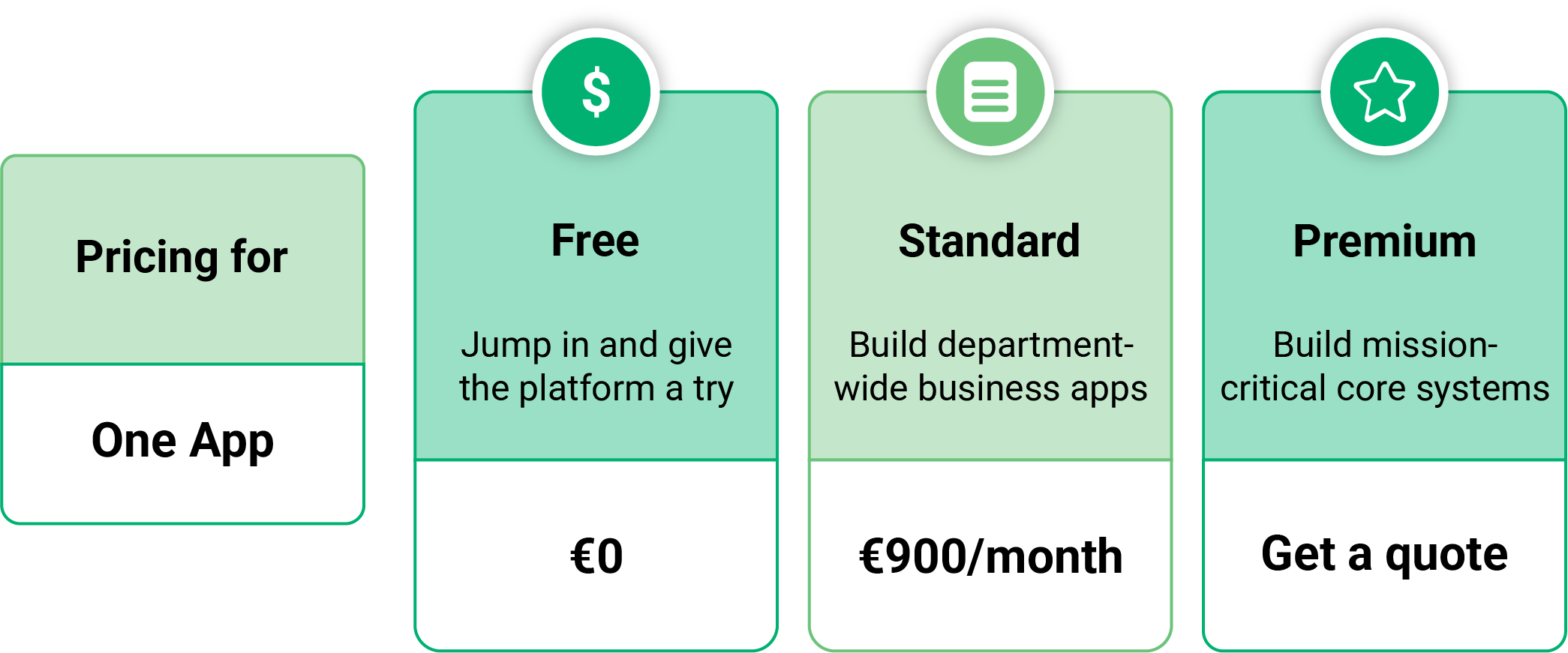
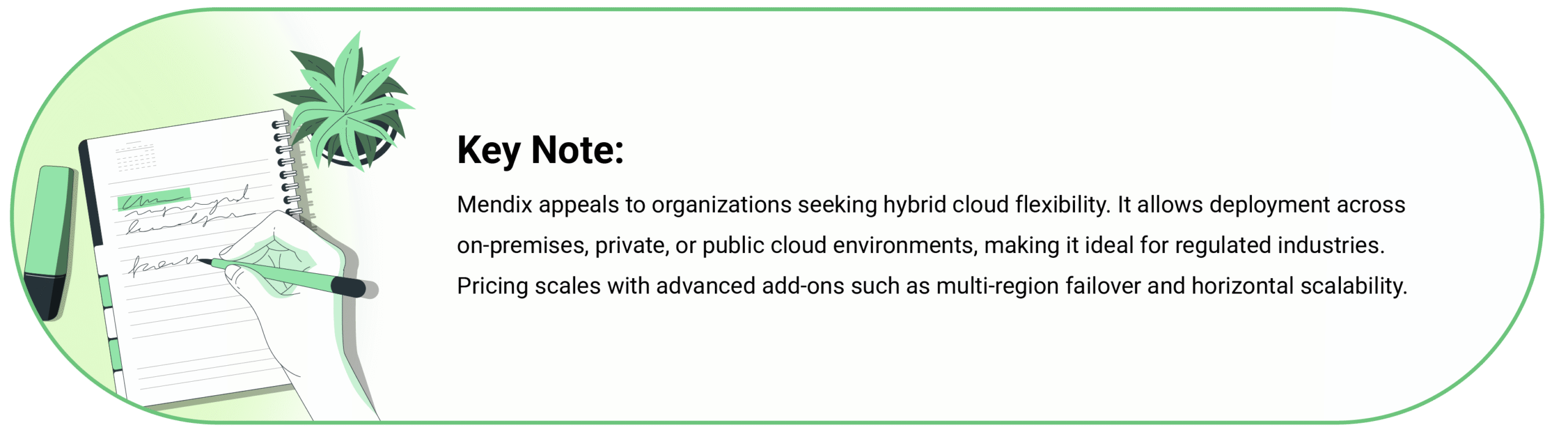
Mendix: Flexibility and Balanced Pricing for Enterprises
Model: Tiered subscription (Free, Basic, Standard, Premium).
Cost Overview:
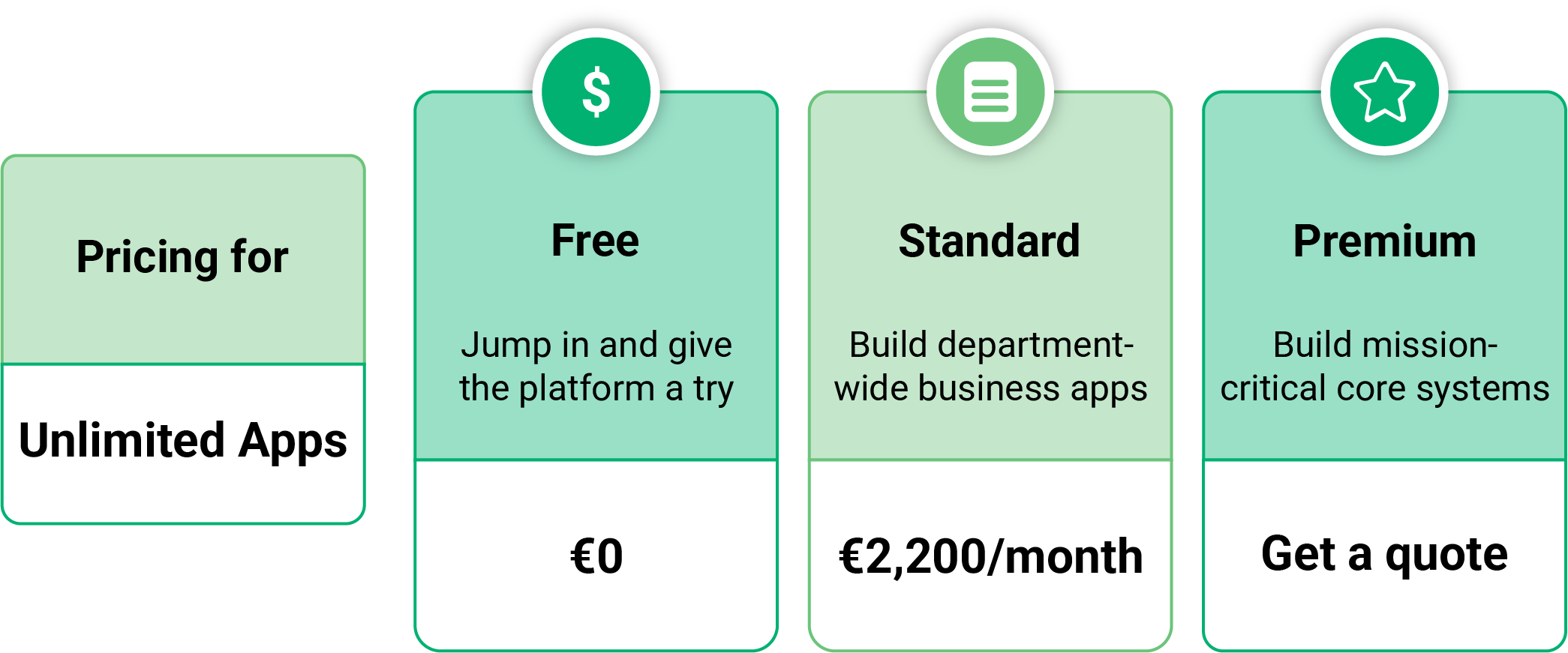
Notes: No credit card required for free plan. Balanced pricing for deployment flexibility
Summary: Which Platform Fits Your Business?
- Choose OutSystems if you’re building full-stack enterprise systems that demand high scalability and performance.
- Choose Power Apps for fast, affordable app development and seamless Microsoft integration, especially when you already have a Microsoft 365 license.
- Choose Mendix for collaboration flexibility, hybrid deployment, and a balanced enterprise pricing model.
Each platform offers a unique value proposition. The right choice depends on your organization’s tech stack, scalability goals, and ecosystem alignment. Whether you’re optimizing internal workflows or delivering enterprise-grade systems, understanding these pricing structures ensures you invest wisely in 2025’s evolving low-code landscape.
Real-World Power Apps Applications by TechnoRUCS
1. Field Quality Tool for ATC Logistics
Project Overview:
TechnoRUCS developed a Field Quality Power Apps Application for ATC Logistics to streamline shipment delivery planning and on-site execution.The app centralizes logistics data, job details, purchase orders, and delivery statuses giving real-time visibility across teams. A built-in pre-delivery checklist ensures readiness in logistics, crew availability, and safety compliance. The “Forward High 5” feature reinforces essential operational standards before dispatch<
Impact:
- 60% faster coordination between logistics teams.
- Reduced manual errors and improved accountability.
- Consistent adherence to safety protocols across field operations.
2. Financial Assistance App for Mystis Cares
Connecting Salesforce with existing business systems often requires additional planning and testing to ensure data flows accurately across applications.
Project Overview:
Mystis Cares needed a secure, trackable process to manage financial assistance requests. TechnoRUCS built a Power Apps-based Financial Assistance System integrated with Microsoft Dataverse.
It enables providers and enrollees to submit, review, and approve funding requests. Users can attach documents, classify expenses, and track approvals in real-time. Approvers can view dashboards that simplify decision-making.
Impact:
- Reduced approval turnaround time by 50%.
- Transparent expense categorization and documentation.
- Automated workflows ensured compliance and traceability.
3. Governance App for EATON Corporation
Project Overview:
Microsoft Power Apps is redefining how organizations approach app creation. It’s part of the Microsoft Power Platform, alongside Power Automate, Power BI, and Power Pages forming a unified ecosystem for automation, analytics, and digital innovation.
Power Apps is designed to empower everyone – from IT professionals to business users – to build apps that simplify daily operations and drive efficiency.
Impact:
- Decision-making cycle time cut in half.
- Clear visibility into committee activities.
- Improved collaboration between business units and leadershi
Which Platform Should You Choose?
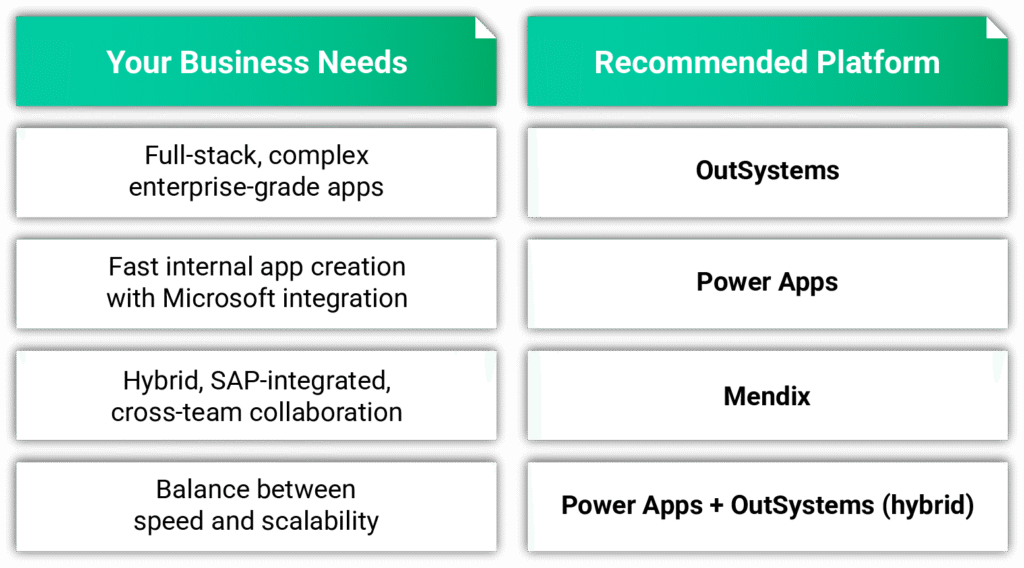
Table of Contents
- 1. Introduction: Why Every Business Is Talking About Low-Code in 2025
- 2. Why Low-Code Is No Longer Optional
- 3. Meet the Big Three
- 4. Deep Dive: Understanding the Platforms
- 5. Feature Comparison: OutSystems vs Power Apps vs Mendix.
- 6. Real-World Power Apps Applications by TechnoRUCS
- 7. Which Platform Should You Choose?
- 7. Conclusion
- 8. FAQs
Talk to our Microsoft Expert Consultant
Conclusion
Low-code isn’t a shortcut – it’s a smarter way to work. It helps companies modernize faster, automate intelligently, and innovate without friction.
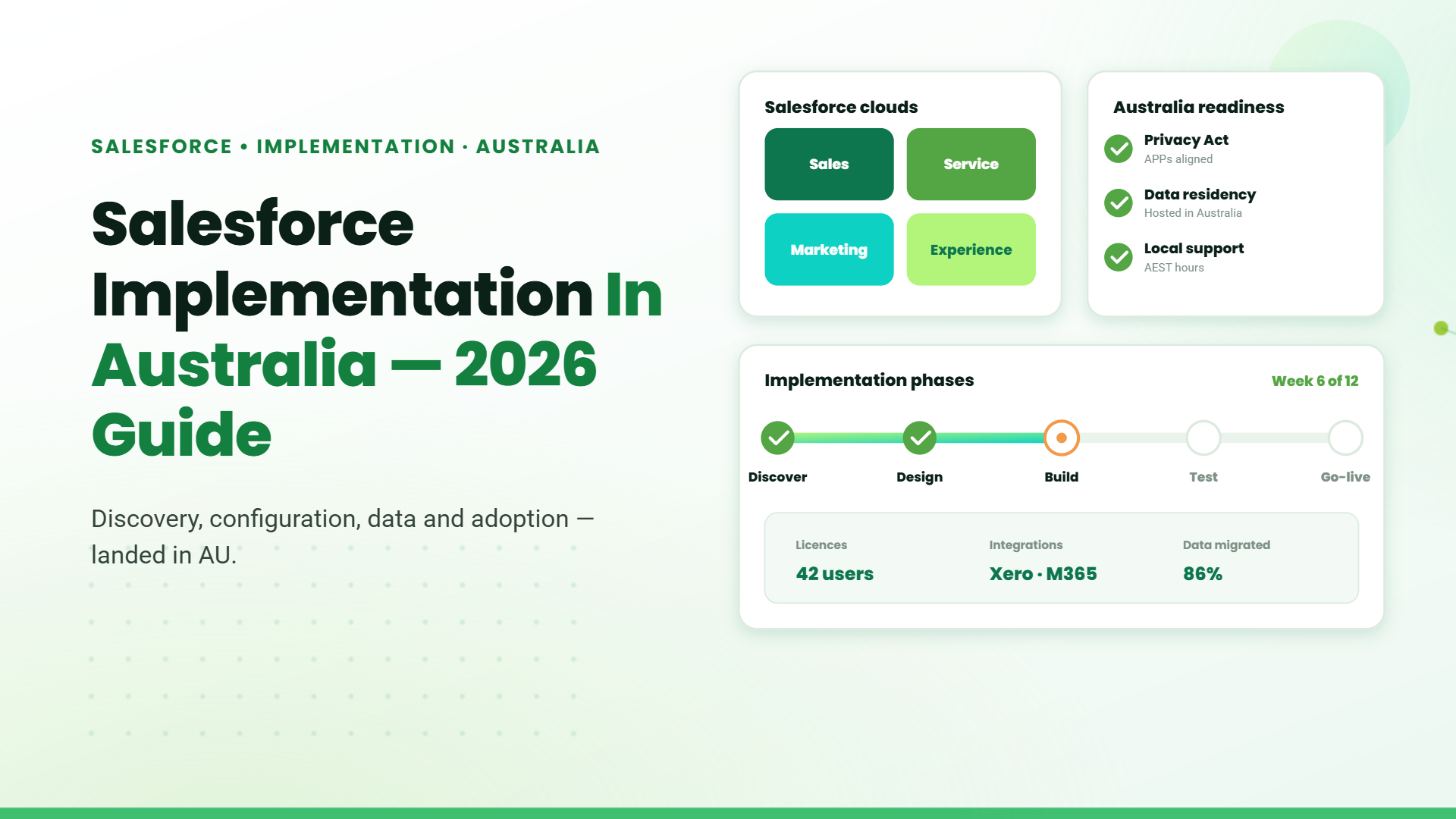
For businesses considering Salesforce implementation in Australia, choosing the right approach and implementation partner can make the transition smoother and help maximize the value of Salesforce over time.
- Here’s the simple breakdown:
- Power Apps wins for speed, accessibility, and cost-efficiency.
- OutSystems wins for complex, enterprise-grade scalability.
- Mendix wins for collaboration and hybrid flexibility.
But if your organization already runs on Microsoft 365 or Azure, Power Apps is the clear leader. It’s affordable, secure, and scalable and backed by the entire Microsoft ecosystem.
Low-code isn’t a shortcut – it’s a smarter way to work. It helps companies modernize faster, automate intelligently, and innovate without friction
Share this article

About the Author
Chandru is a technology professional experienced in business automation, Microsoft solutions, and digital transformation. Through practical insights, [he/she/they] helps businesses understand emerging technologies and achieve meaningful outcomes.